How AI Could Solve Academia's Research Fraud Problem
The U.S. alone loses an estimated $28 billion annually on non-reproducible preclinical research
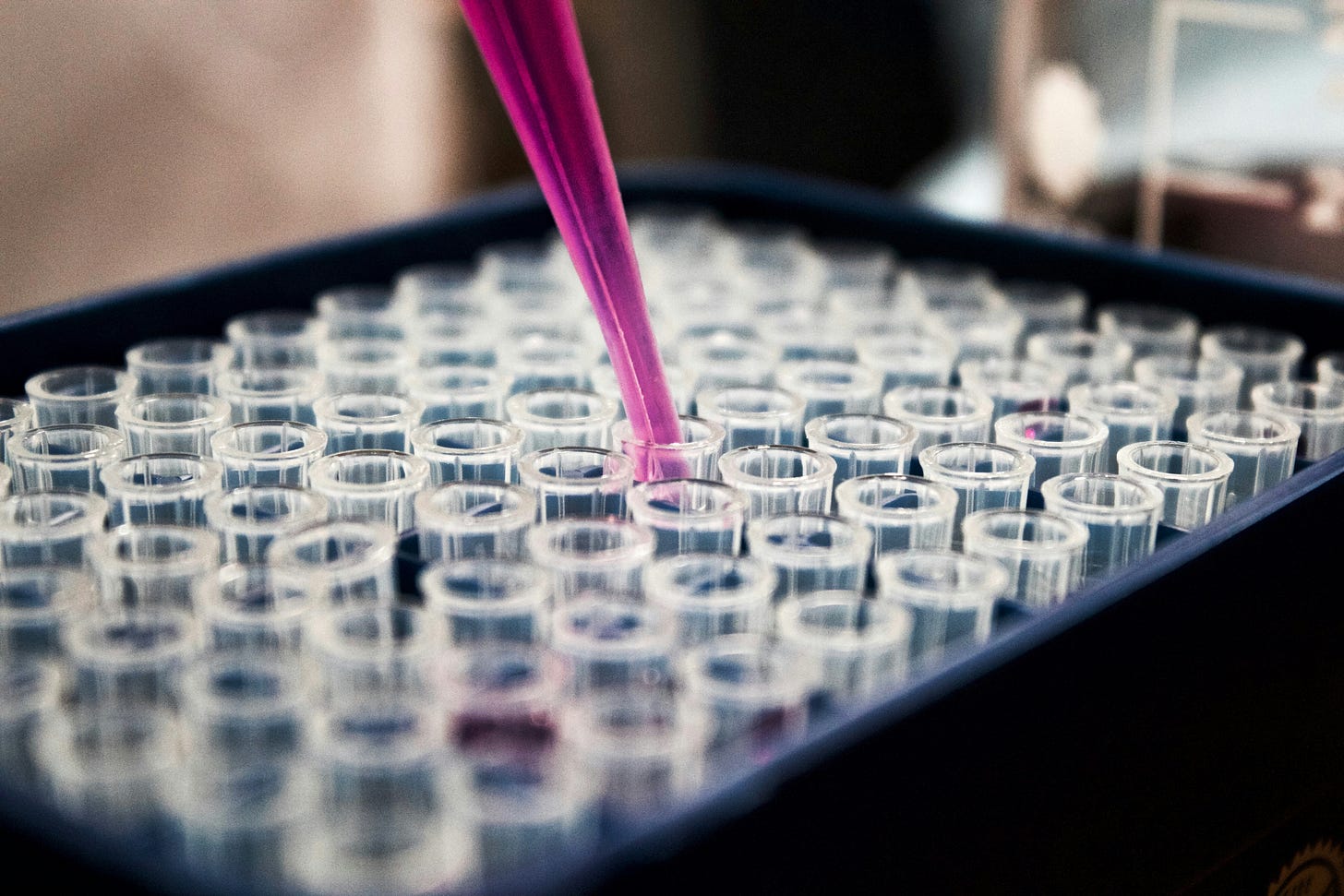
Photo by Louis Reed on Unsplash
Academic research is central to human progress, yet its quality control system (peer review) has remained unchanged since its formal adoption in the mid-20th century. Today, this system faces increasing challenges, including overwhelmed reviewers and doubts about its ability to uphold research integrity amidst revelations regarding the low rate of research replication. However, recent advances in artificial intelligence present an opportunity to revolutionize this process.
The Hidden Costs of Peer Review
The current peer review system has an enormous impact on research productivity. Globally, academics spend an estimated 130 million hours (equivalent to 15,000 years) annually reviewing papers, time that could otherwise be spent on original research. Individual researchers typically review eight documents annually, spending around five hours on each review. This represents a significant opportunity cost, especially considering that most researchers receive no direct compensation for this work.
Meanwhile, the traditional publishing industry has built a remarkably profitable business model around this free labor. Major publishers like Elsevier, Springer, and Wiley consistently generate 30-40% profit margins, mainly from university subscription fees. This system strains institutional budgets and restricts access to knowledge often produced using public funding.
A Crisis of Confidence
Beyond its inefficiencies, the current system is struggling to maintain research quality. The academic world has been rocked by high-profile cases of research misconduct, such as the recent resignation of Stanford’s president, Marc Tessier-Lavigne, over research integrity concerns. These cases, while dramatic, represent only the tip of the iceberg.
More insidious are the widespread methodological issues plaguing academic research. Practices like p-hacking (manipulating data analysis until statistically significant results emerge) and HARKing (Hypothesizing After Results are Known) have contributed to a replication crisis across disciplines. The numbers are sobering: only about 37% of psychology studies, 61% of economics papers, and 46% of preclinical cancer biology research successfully replicate.
The financial impact is staggering: the U.S. alone loses an estimated $28 billion annually on non-reproducible preclinical research. However, the cost to public trust in scientific institutions may be even more concerning, as surveys show declining confidence in research findings.
The U.S. alone loses an estimated $28 billion annually on non-reproducible preclinical research
AI as a Solution: A New Framework for Peer Review
Artificial intelligence offers a promising path forward. By implementing AI in a three-stage peer review process, we could dramatically improve the efficiency and effectiveness of research validation.
Stage 1: AI-Powered Initial Review
The first stage would use AI to conduct a comprehensive technical review of submissions. This would include checking internal consistency, verifying mathematical calculations, and ensuring accurate citation usage. We’ve already seen the potential of this approach. Recently, researchers used AI to identify a critical mathematical error in a study about plastic utensils and cancer outcomes, where a 10x calculation error had slipped past traditional peer review.
Stage 2: Focused Human Review
With AI handling the technical verification, human reviewers could focus on what they do best: evaluating research novelty, assessing field relevance, and considering strategic implications. This shift could reduce review time from 5-6 hours to 2-3 hours per paper while improving review quality through more focused attention on crucial aspects.
Stage 3: AI Replication Assessment
AI could unlock faster and cheaper ways of validating research findings through simulated replication. For physical sciences, this might involve computational simulations; for social sciences, agent-based modeling could test the robustness of conclusions. The result would be a “replication probability score,” giving readers immediate insight into the likelihood that the results will be replicated in further studies.
This AI-enhanced system could be paired with open-access publishing, democratizing access to scientific knowledge. By eliminating traditional publishing intermediaries, we could redirect billions in subscription fees toward actual research while accelerating the pace of scientific discovery.
Impact and Implementation
The potential impact is significant. By reducing the peer review time by 50-70%, we could save 7-10 million researcher hours each year. Publication timelines could be halved while replication rates improve. These efficiency gains would accumulate over time, speeding up the pace of scientific discovery.
However, implementation would face challenges. The publishing industry would likely resist changes to its profitable business model. Technical infrastructure would need to be developed, and standards would need to be established across disciplines. The potential for gaming the AI system would also need to be addressed.
Reducing peer review time by 50-70% frees up 7-10 million researcher hours annually. Publication timelines could be cut in half, and replication rates could improve by 30-50%
The transition to this new system would best be accomplished through a phased approach. Initial pilot programs in select journals could validate the concept and refine the AI tools. Integration with existing submission systems and preprint servers would follow, culminating in a broader transition to open-access publishing.
The current peer review system, born in an era of physical journals and postal correspondence, is showing its age. As artificial intelligence advances, we have an opportunity, perhaps even an obligation, to reimagine this crucial process for the modern era.
The proposed AI-enhanced system could dramatically improve research quality while freeing up millions of hours for original research. It would democratize access to knowledge while providing better guarantees of research quality. The technical capabilities primarily exist; what’s needed now is the will to implement them.
The drop in public confidence resulting from the replication crisis will only worsen unless proactive steps are taken to make peer review fit for purpose. Whether we step up to the challenge will determine the future of academic research and the pace at which human knowledge can advance.
First published on Substack.